Weed With Blood Thinners: Is It Safe to Mix Cannabis and Anticoagulants?
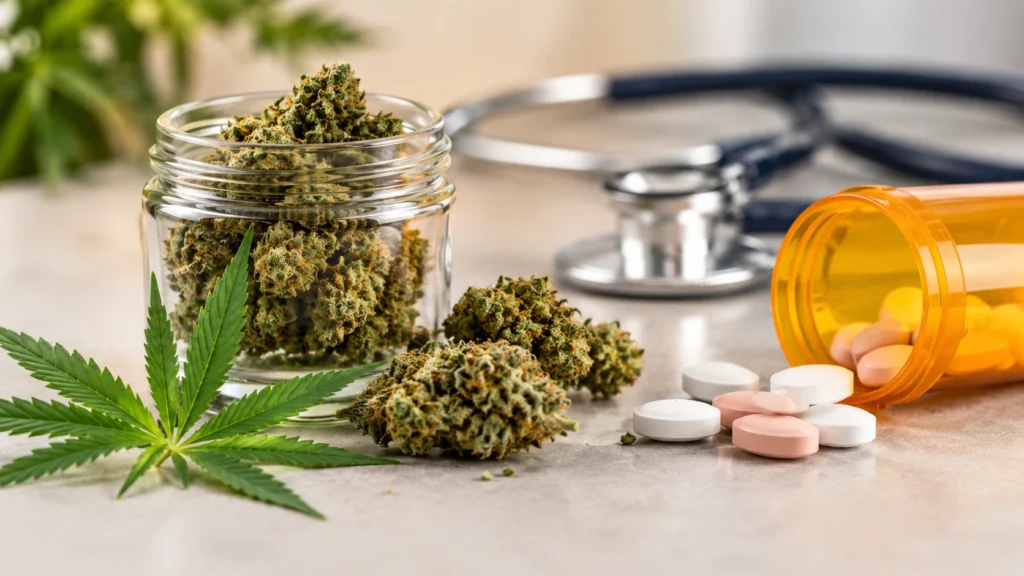
Quick Answer: Mixing weed with blood thinners may carry risks, but the level of evidence depends on the medication.
Warfarin has the clearest documented concern. Case reports have described unusually high INR levels and bleeding after patients used cannabis or CBD while taking warfarin. Researchers believe cannabinoids may interfere with enzymes involved in warfarin metabolism, potentially increasing its effect.
For newer blood thinners, including apixaban and rivaroxaban, there is much less human evidence specifically examining cannabis interactions. A 2023 systematic review found evidence of anticoagulant-cannabinoid interactions primarily with warfarin and found no meaningful clinical evidence for most other anticoagulants at the time of its search.
Because blood thinners are prescribed to prevent potentially serious blood clots, do not stop, skip, or change your medication because you use cannabis unless the prescriber tells you to do so.
Blood thinners are commonly prescribed after conditions such as atrial fibrillation, deep vein thrombosis, pulmonary embolism, certain heart procedures, or other situations where blood clots are a concern.
At the same time, cannabis products have become more widely available in many places. Some people use marijuana recreationally, while others use cannabis or CBD products for reasons such as pain, sleep, or other symptoms.
That creates an important question: Can you use weed with blood thinners?
The problem is that cannabis is not a single standardized product. THC, CBD, concentrates, edibles, tinctures, smoked flower, and other products can deliver very different amounts of cannabinoids. The American Heart Association has also highlighted the potential for cannabinoids to interact with cardiovascular medications through drug-metabolizing pathways.
The safest approach is to look at the blood thinner you take rather than assuming every medication has the same interaction with cannabis.
Taking a Blood Thinner and Considering Cannabis?
Before adding cannabis or CBD to your routine, make sure you understand how it could fit with your current medications.
What Are Blood Thinners?
“Blood thinner” is a common term, but it can refer to several types of medications.
1. Anticoagulants
Anticoagulants reduce the blood’s ability to form clots. Common examples include:
- Warfarin
- Apixaban (Eliquis)
- Rivaroxaban (Xarelto)
- Dabigatran (Pradaxa)
- Edoxaban (Savaysa)
- Heparin
These medications are often prescribed to reduce the risk of conditions such as stroke, deep vein thrombosis, and pulmonary embolism.
2. Antiplatelet drugs
Antiplatelet medicines work differently. They reduce the ability of platelets to stick together and form clots.
Examples include:
- Aspirin
- Clopidogrel (Plavix)
- Prasugrel
- Ticagrelor
This distinction matters because an interaction that is well documented with one medication should not automatically be assumed to apply in exactly the same way to another.
Why Can Weed Interact With Blood Thinners?
One reason researchers are concerned about cannabis-drug interactions is that cannabinoids can affect enzymes and transport systems involved in how medications are processed by the body.
THC and CBD have been reported to affect several cytochrome P450 enzymes, including pathways involved in the metabolism of certain cardiovascular medications. The American Heart Association specifically identifies potential interactions between cannabinoids and medications metabolized through these pathways.
The clinical effect can depend on several factors, including:
- Which blood thinner you take
- Whether you use THC, CBD, or both
- The amount of cannabis used
- How often you use it
- Whether the product is smoked, inhaled, eaten, or taken as an oil
- Other medications or supplements you take
- Liver and kidney function
- Your underlying medical condition
This is one reason it is difficult to give everyone the same answer about cannabis and blood thinners.
Weed With Warfarin: What Does the Research Show?
Warfarin is the blood thinner for which cannabis interactions have been documented most clearly.
Warfarin has a narrow therapeutic range, meaning the amount of anticoagulation needs to remain within a relatively controlled range. Doctors use an INR (international normalized ratio) blood test to monitor its effect. Several published case reports have described increased INR values after cannabis exposure in people taking warfarin.
For example, one case involved a patient whose INR rose to 7.2 after a month of edible cannabis use combined with cannabis smoking. After cannabis was discontinued, the INR decreased with appropriate medication management.
Another published case described a patient taking warfarin who developed an INR of 4.6 following recreational cannabis use.
A separate case report documented gastrointestinal bleeding, nosebleeds, and bruising in a warfarin user whose cannabis consumption increased substantially. These reports do not prove that cannabis will cause a dangerous interaction in every person taking warfarin. However, they provide enough evidence for researchers and clinicians to take the combination seriously.
A 2023 systematic review identified seven case reports involving warfarin and cannabinoids. The authors noted that the available evidence was limited and that cannabis exposure in the reported cases varied considerably.
What Is INR and Why Does It Matter?
INR is a laboratory measurement used to assess how strongly warfarin is affecting blood clotting. If the INR becomes too low, the medication may not provide enough anticoagulation for the person’s treatment goal.
If it becomes too high, the risk of bleeding can increase. That is why people taking warfarin need regular INR monitoring, particularly when something changes that could affect their medication.
If you use cannabis regularly and then suddenly increase or decrease your use, tell the healthcare professional managing your warfarin.
Can CBD Affect Warfarin?
CBD deserves special attention because it is sometimes assumed to be harmless simply because it does not produce the same intoxicating effect as THC.
CBD can still affect drug-metabolizing enzymes.
Research and case reports have raised concerns that CBD may inhibit CYP2C9, an enzyme involved in the metabolism of warfarin. This could potentially increase warfarin exposure and alter INR.
CBD products also vary considerably in concentration and formulation. Therefore, switching from marijuana to a high-dose CBD oil should not automatically be considered risk-free for someone taking warfarin.
What About Eliquis, Xarelto, Pradaxa, or Other Blood Thinners?
This is an important area where the available evidence is much thinner.
A 2023 systematic review of anticoagulant-cannabinoid interactions found evidence supporting an interaction with warfarin but reported that evidence for interactions involving other anticoagulants was lacking at that time.
That does not mean cannabis has been proven safe with every newer blood thinner. It means researchers have not established the same level of clinical evidence.
1. Apixaban (Eliquis)
Apixaban is affected by certain CYP3A4 and P-glycoprotein inhibitors and inducers. Strong interactions can change apixaban exposure and therefore affect bleeding or clotting risk.
The specific clinical interaction between ordinary cannabis use and apixaban has not been established as clearly as the warfarin-cannabis interaction.
If you take Eliquis and use cannabis, your prescriber or pharmacist should review your complete medication and supplement list.
2. Rivaroxaban (Xarelto)
Rivaroxaban is also processed through CYP3A4 and transport systems, including P-glycoprotein. Drugs that significantly alter these pathways can change rivaroxaban exposure.
However, there is not the same body of clinical case evidence demonstrating a cannabis-rivaroxaban interaction as there is for warfarin.
3. Dabigatran and Edoxaban
There is currently less direct clinical research on cannabis interactions with these medications as well. That makes it especially important not to assume that “no known interaction” means “proven safe.”
What About Aspirin and Clopidogrel?
Aspirin and clopidogrel are antiplatelet medicines rather than traditional anticoagulants. Cannabis interactions with these medications are less clearly established than the warfarin interaction.
There is, however, a theoretical reason for caution with some combinations.
For example, CBD has been discussed as a potential inhibitor of CYP2C19, an enzyme important for converting clopidogrel into its active form. A reduction in clopidogrel activation could theoretically reduce its antiplatelet effect.
This is an area where laboratory and pharmacological concerns should not be confused with proven outcomes in ordinary cannabis users.
If you take clopidogrel after a heart attack, stroke, stent placement, or another cardiovascular event, speak with your prescriber before adding cannabis or CBD.
Does Smoking Weed Increase Bleeding Risk?
The question is more complicated than simply asking whether cannabis “thins the blood.”
Cannabis itself is not interchangeable with prescription anticoagulants.
Smoking cannabis can affect heart rate and blood pressure, and the American Heart Association has raised concerns about cardiovascular effects associated with cannabis use.
For someone already being treated for a cardiovascular condition, those effects may be relevant even if the cannabis does not directly change the concentration of their blood thinner.
There is also a practical safety issue: anticoagulants can make bleeding from injuries more difficult to control. People taking anticoagulants are generally advised to take precautions to avoid injuries.
Does the Form of Cannabis Matter?
Potentially.
Cannabis can be consumed in different ways, including:
- Smoking flower
- Vaping
- Edibles
- Tinctures
- Oils
- Concentrates
- Sublingual products
The amount and speed of cannabinoid absorption can differ substantially between these forms.
Some published warfarin interaction reports involved inhaled cannabis, while others involved oral cannabis or CBD products.
For this reason, changing from smoking cannabis to a concentrated edible or CBD oil should not be treated as a simple one-to-one substitution.
Signs of Excessive Bleeding to Watch For
Anyone taking an anticoagulant should know the warning signs of significant bleeding.
Possible symptoms include:
- Unusual or unexplained bruising
- Frequent or prolonged nosebleeds
- Bleeding gums
- Blood in urine
- Blood in stool
- Black or tarry stools
- Vomiting blood
- Coughing up blood
- Bleeding that does not stop normally
- Unusually heavy menstrual bleeding
- Severe or persistent headache
- Sudden weakness, confusion, or difficulty speaking
For example, the NHS lists blood in urine or stool, vomiting or coughing up blood, and signs of possible brain bleeding among serious bleeding symptoms associated with apixaban.
If you experience severe bleeding or symptoms that could indicate internal bleeding, seek urgent medical attention.
What Should You Do If You Take a Blood Thinner and Want to Use Weed?
A practical conversation with your healthcare professional can reduce unnecessary risk.
1. Tell them exactly what you use
Do not simply say “I use marijuana.”
Tell them whether you use:
- THC
- CBD
- Both THC and CBD
- Flower
- Edibles
- Oils
- Concentrates
- Tinctures
2. Explain how often you use it
A person using cannabis once every few months is different from someone using a concentrated product every day. Frequency and dose can affect the amount of cannabinoid exposure.
3. Tell them about recent changes
A sudden increase in cannabis use may be more relevant than a long-standing, stable pattern. The same applies if you stop using cannabis after regular use.
4. Provide your complete medication list
Include prescriptions, over-the-counter medications, vitamins, herbs, and supplements.
This is particularly important because drug interactions can involve more than one medication.
5. Ask whether additional monitoring is needed
For someone taking warfarin, the clinician may determine that closer INR monitoring is appropriate when cannabis use changes.
Do not change your warfarin dose yourself.
Should You Stop Your Blood Thinner If You Use Cannabis?
No. Do not stop a prescribed blood thinner on your own.
Blood thinners are often prescribed because a person’s risk of developing a dangerous clot is significant.
For example, the current Eliquis prescribing information warns that premature discontinuation can increase the risk of thrombotic events.
The correct response to a possible cannabis interaction is to discuss it with the healthcare professional managing your medication.
They can determine whether you need monitoring, a medication adjustment, or a different approach.
What If You Already Mixed Weed With a Blood Thinner?
If you used cannabis while taking a blood thinner, do not automatically assume that an emergency has occurred.
Instead, consider:
- Which blood thinner you take.
- How much cannabis you used.
- Whether you use cannabis regularly.
- Whether you recently increased your cannabis use.
- Whether you have symptoms of bleeding.
- Whether you take other medications that can affect bleeding.
If you take warfarin, tell your anticoagulation clinic or prescriber about significant changes in cannabis use because INR monitoring may be relevant.
If you have heavy bleeding, blood in your stool or vomit, coughing up blood, severe unexplained headache, fainting, or other potentially serious symptoms, seek urgent medical care.
Cannabis and Blood Thinners: What the Research Actually Tells Us
It is useful to separate established evidence from theoretical concerns.
What is reasonably well documented?
- Cannabis-cannabinoid interactions with warfarin have been described in multiple case reports.
- Some cases involved substantially elevated INR values.
- Bleeding events have been reported in some warfarin users.
- Cannabinoids can affect drug-metabolizing enzymes.
- More research is needed to understand interactions with many newer anticoagulants.
What remains uncertain?
There is not enough clinical evidence to say that cannabis interacts in the same way or to the same degree with every blood thinner.
A systematic review specifically evaluating anticoagulants and cannabinoids found evidence centered on warfarin and noted the lack of evidence for most other anticoagulants.
This distinction matters because it prevents two common mistakes:
Mistake 1: Assuming every blood thinner has exactly the same cannabis interaction.
Mistake 2: Assuming newer blood thinners are automatically safe with cannabis simply because fewer interactions have been reported.
Neither conclusion is supported by the available evidence.
Frequently Asked Questions
Can you smoke weed while taking blood thinners?
It may not be safe to assume that smoking cannabis is harmless while taking a blood thinner. The strongest documented interaction concerns warfarin, but research on other medications is limited. Talk with your doctor or pharmacist before using cannabis.
Does weed make blood thinner?
Cannabis should not be thought of as a substitute for a prescription blood thinner. THC and CBD can affect drug-metabolizing pathways, but that does not mean cannabis provides predictable anticoagulation.
Can you take CBD while on warfarin?
CBD may interact with warfarin because it can affect enzymes involved in warfarin metabolism. Published reports have described changes in INR with cannabinoid exposure. Speak with your prescriber before using CBD while taking warfarin.
Can I use weed while taking Eliquis?
There is less direct clinical evidence about cannabis and Eliquis than there is about cannabis and warfarin. That does not establish that the combination is risk-free. Ask your prescriber or pharmacist to review your specific cannabis product and medications.
Can you take cannabis with Xarelto?
A clinically established cannabis-Xarelto interaction has not been demonstrated to the same extent as the warfarin interaction. However, rivaroxaban has important drug-interaction pathways, so people taking it should discuss cannabis use with their healthcare professional.
Does CBD interact with blood thinners?
CBD can affect enzymes involved in the metabolism of several medications. The best-documented concern among blood thinners is warfarin. Evidence for many other anticoagulants remains limited.
Does cannabis increase INR?
In some reported cases, cannabis exposure was associated with increased INR in people taking warfarin. However, these reports are based largely on case reports rather than controlled clinical trials, so the effect cannot be predicted for every person.
What should I do if my INR is high after using cannabis?
Contact the healthcare professional managing your warfarin. Do not change your warfarin dose without medical guidance. If you have signs of serious bleeding, seek urgent medical care.
Can I stop my blood thinner so I can use cannabis?
You should not stop a prescribed blood thinner on your own. Stopping some anticoagulants prematurely can increase the risk of blood clots. Discuss your cannabis use with the prescriber first.
Final Thoughts
The question of whether you can safely use weed with blood thinners depends heavily on which medication you take and how you use cannabis.
Warfarin has the clearest documented concern. Multiple case reports have linked cannabis or cannabinoids with elevated INR and, in some cases, bleeding. Researchers believe changes in drug metabolism may contribute to this interaction.
For newer anticoagulants such as apixaban and rivaroxaban, direct clinical evidence involving cannabis is much more limited. That uncertainty is a reason for caution, not proof that the combination is either dangerous or completely safe.
If you take a blood thinner, give your healthcare professional the complete picture: the name and dose of your medication, the cannabis or CBD product you use, how much you take, and how frequently you use it.
Most importantly, never change or stop your blood thinner simply because you want to use cannabis. Your prescriber can help you weigh the potential interaction against the reason you need anticoagulation.
